Traditional Chinese Medicine (TCM) is a longstanding system of healthcare originating in China. It encompasses acupuncture, Chinese herbal medicine, cupping and other traditional approaches to health and wellbeing.
Rather than considering a symptom in isolation, TCM traditionally explores patterns involving the whole person, including physical symptoms, sleep, digestion, emotional wellbeing and lifestyle. These traditional frameworks are used alongside—not in place of—modern clinical assessment.
At Ethan Zhang Acupuncture & Chinese Medicine in Goodwood, Adelaide, we combine traditional Chinese Medicine principles with contemporary knowledge of anatomy, physiology, clinical safety and individual health needs.
The following concepts introduce the traditional foundations of Chinese Medicine and how they help practitioners understand individual patterns of health and wellbeing. In contemporary practice, these perspectives are considered alongside medical history, clinical assessment and appropriate healthcare.
1. Yin and Yang — Understanding Balance
Two Complementary Aspects of Change
Yin and Yang describe interdependent and changing qualities in traditional Chinese philosophy.
- Yin is associated with rest, coolness, nourishment and stillness.
- Yang is associated with activity, warmth, movement and transformation.
Neither is inherently good or bad. In TCM, wellbeing is traditionally described in terms of a dynamic relationship between these qualities, rather than a fixed state of perfect balance.
How Is This Used in Practice?
Practitioners may use Yin–Yang terminology to describe symptom patterns. For example, persistent coldness and fatigue may be interpreted differently from heat sensations, restlessness and thirst.
These patterns guide traditional assessment and help shape individualised care. Persistent or unexplained symptoms are also considered from a contemporary clinical perspective.
2. The Five Elements — Relationships and Patterns
Wood, Fire, Earth, Metal and Water
The Five Elements, also called the Five Phases (Wu Xing), are a traditional model for describing relationships and cycles of change.
- Wood — associated with the traditional Liver system
- Fire — associated with the traditional Heart system
- Earth — associated with the traditional Spleen system
- Metal — associated with the traditional Lung system
- Water — associated with the traditional Kidney system
In this framework, the elements are understood to interact through cycles of support and regulation. Practitioners may consider these relationships when interpreting broader symptom patterns.
In Chinese Medicine, names such as Liver, Spleen and Kidney describe traditional functional systems and relationships, rather than corresponding exactly to the organs defined in modern anatomy.
3. Qi and Blood — Function and Nourishment
Two Central Concepts in Chinese Medicine
Qi is often translated as vital energy, although its traditional meanings also include activity, movement, function and regulation.
Blood (Xue) in Chinese Medicine describes nourishment and circulation within the traditional framework, with a broader meaning than blood in modern physiology.
Traditional pattern descriptions include:
- Qi deficiency — commonly associated with tiredness or reduced stamina
- Qi stagnation — associated with tension, distension or discomfort
- Blood deficiency — may be associated with dryness, dizziness or disturbed sleep
- Blood stasis — traditionally used to describe certain persistent or localised pain patterns
These terms help practitioners recognise patterns and select an individualised approach. They are considered alongside appropriate medical assessment when symptoms suggest an underlying health condition.
4. Meridians and Acupuncture Points
Traditional Pathways Used in Acupuncture
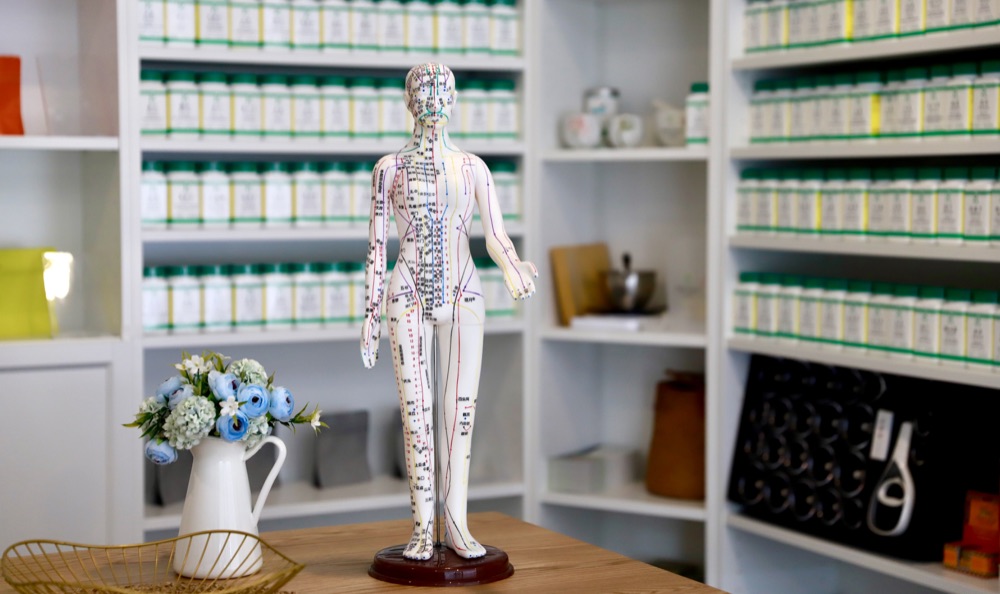
In Chinese Medicine, meridians (Jing Luo) are traditionally described as pathways linking regions and functional systems of the body. Acupuncture points are identified along these pathways and at other recognised locations.
Point selection may consider:
- The location, nature and duration of symptoms
- Relevant physical examination findings
- Traditional pattern differentiation
- Medical history, patient preferences and treatment goals
Traditional Theory and Modern Understanding
Meridian theory provides a traditional framework for selecting acupuncture points and understanding relationships between different areas of the body. Meridians are not the same as anatomical nerves or blood vessels.
Modern research also explores how acupuncture may influence sensory nerves, pain processing and other physiological responses. These perspectives can inform a thoughtful, individualised treatment approach.
In clinical practice, acupuncture may be delivered through manual needling or, when appropriate, electroacupuncture, which applies controlled electrical stimulation through selected needles.
Learn more: Acupuncture | Electroacupuncture
5. Six External Factors — Traditional Environmental Influences
Wind, Cold, Summer Heat, Dampness, Dryness and Fire
TCM describes Six External Factors (Liu Yin) to interpret symptom patterns in relation to environmental conditions:
- Wind — associated with changing or moving symptoms
- Cold — associated with cold sensations or discomfort aggravated by cold
- Summer Heat — associated with patterns occurring in hot weather
- Dampness — used to describe heaviness or sluggishness
- Dryness — associated with dryness of the skin, throat or other tissues
- Fire / Heat — associated with heat sensations or irritation
These descriptions help explain how traditional practitioners interpret the influence of seasons, climate and environmental changes on a person’s experience of symptoms. They are not substitutes for modern explanations of infection or other medical conditions.
6. The Seven Emotions — Mind and Body
Emotional Wellbeing in Traditional Chinese Medicine
TCM recognises connections between emotional experiences and physical wellbeing. The traditional Seven Emotions are:
- Joy
- Anger
- Worry
- Pensiveness
- Sadness
- Fear
- Fright
Within this framework, emotional experiences may be considered alongside sleep, appetite, muscle tension, digestive symptoms and other concerns.
Modern healthcare also recognises the close relationship between stress, sleep, pain perception and digestion. Considering emotional wellbeing alongside physical symptoms can support a more complete understanding of each person’s health, without assuming that emotions alone explain illness.
7. Chinese Herbal Medicine — Properties and Individualised Formulas
Four Natures and Five Flavours
Chinese herbal medicine traditionally classifies herbs according to properties such as the Four Natures and Five Flavours.
The Four Natures: Cold, Cool, Warm and Hot. Some herbs are also described as Neutral.
The Five Flavours: Sour, Bitter, Sweet, Pungent and Salty.
These traditional categories describe how herbs are understood and combined within Chinese Medicine. They are distinct from modern pharmacological classifications.
Why Are Herbal Prescriptions Individualised?
A Chinese Medicine practitioner may consider a person's symptoms, traditional pattern assessment, medical history, medications and treatment goals when developing a herbal prescription. Two people with similar symptoms may receive different formulas.
Modern concentrated herbal granules may be used where appropriate, with instructions tailored to the prescribed formula and the patient's circumstances.
Herbal medicines are not risk-free. They may cause adverse effects, interact with prescription medicines or supplements, and be unsuitable during pregnancy or for certain medical conditions. Ingredient quality, correct identification and dosing are important. Do not stop prescribed medicines without advice from your treating medical professional.
Learn more: Chinese Herbal Medicine
Traditional Chinese Medicine and Modern Healthcare
Bringing Different Perspectives Into a Thoughtful Consultation
Traditional Chinese Medicine and contemporary biomedicine use different frameworks to describe health and illness.
TCM concepts such as Yin–Yang, Qi and the Five Elements can inform traditional assessment and treatment selection. Modern clinical care also considers anatomy, physiology, medical history, examination findings, scientific evidence and patient safety.
At Ethan Zhang Acupuncture & Chinese Medicine, our approach is to:
- Listen carefully to your symptoms, concerns and personal goals
- Review relevant medical history, medications and previous investigations
- Consider both traditional Chinese Medicine patterns and appropriate clinical assessment
- Discuss whether acupuncture, herbal medicine or another approach may be suitable
- Explain possible benefits, uncertainties, risks and alternatives
- Recommend medical assessment or referral when symptoms require further investigation
Our clinical interests include musculoskeletal discomfort, rehabilitation support, digestive concerns, sleep and stress-related symptoms, women's health and general wellbeing. We consider each person’s needs, treatment preferences and relevant clinical evidence when recommending care.
Chinese Medicine can be used alongside appropriate medical care, but should not delay urgent assessment or replace essential prescribed treatment.
How Chinese Medicine Is Used in Our Clinic
Our services are tailored to each person's health needs and clinical presentation. Depending on your assessment, care may include:
Acupuncture
Fine, sterile, single-use needles are inserted at selected points as part of a personalised treatment plan. Acupuncture is commonly sought for pain management, muscle tension and a range of other health concerns.
Chinese Herbal Medicine
Individualised herbal formulas may be prescribed following a consultation and review of relevant medications, supplements and safety considerations.
Explore Chinese Herbal Medicine →
Cupping Therapy
A traditional technique using gentle suction applied to the skin. Cupping may be used for muscle tightness, stiffness and localised discomfort, either on its own or alongside acupuncture.
Electroacupuncture
A form of acupuncture using gentle, controlled electrical stimulation through selected needles. It may be included in a treatment plan when clinically appropriate and safe.
Not every person needs every technique. Treatment recommendations are based on clinical assessment, informed consent, personal preferences and realistic goals.
Is Chinese Medicine Right for You?
If you are considering acupuncture or Chinese herbal medicine, an initial consultation provides an opportunity to discuss your symptoms, medical history, treatment options and any questions you may have.
We explain the proposed treatment, expected experience, relevant safety considerations and available options so you can make an informed decision.
Our approach is personalised, patient-centred and informed by both traditional Chinese Medicine principles and contemporary healthcare understanding.
Explore Chinese Medicine in Goodwood, Adelaide
At Ethan Zhang Acupuncture & Chinese Medicine, we provide personalised acupuncture and Chinese Medicine care in Goodwood, Adelaide.
129B Goodwood Road, Goodwood SA 5034
Whether you are seeking support for musculoskeletal pain, digestive concerns, sleep difficulties or general wellbeing, we welcome you to discuss your individual needs and suitable treatment options.