
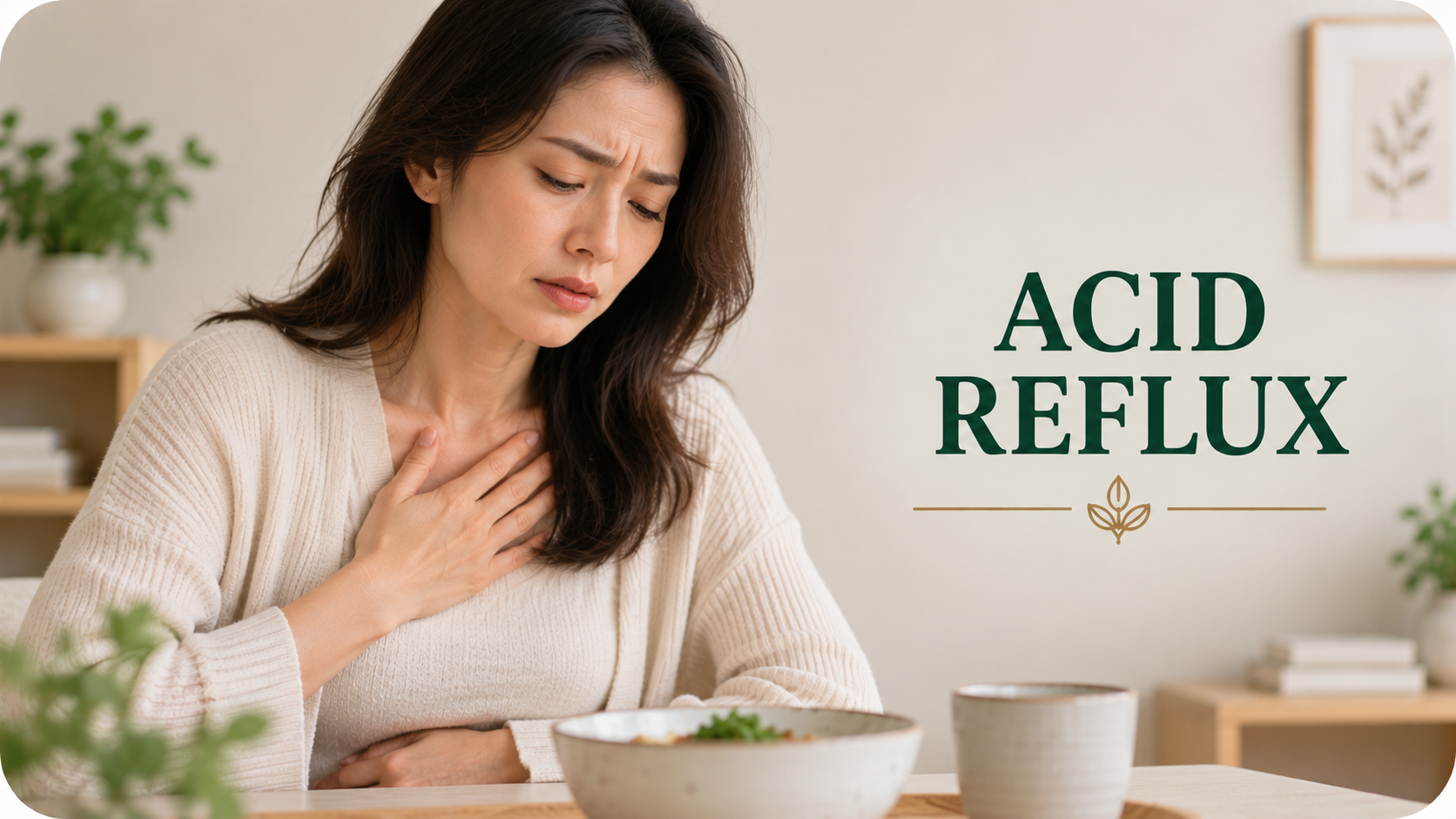
Acid reflux is common, but recurring heartburn or food coming back into the throat can interfere with eating, sleep and everyday comfort. Some people experience symptoms only after certain meals; others have persistent problems that require medical assessment and ongoing management.
At Ethan Zhang Acupuncture & Chinese Medicine in Goodwood, Adelaide, we offer individualised Chinese medicine care that may complement conventional treatment for selected digestive symptoms. An important first step is understanding whether your symptoms are caused by gastro-oesophageal reflux disease (GORD/GERD), another digestive condition, or something that needs medical attention.
What Are Acid Reflux and GERD?
Acid reflux occurs when stomach contents flow backwards into the oesophagus, the tube connecting your mouth to your stomach. The lower oesophageal sphincter normally helps limit this backflow. Reflux may cause a burning sensation behind the breastbone, a sour taste or regurgitation.
Gastro-oesophageal reflux disease (GORD) — also commonly called GERD — refers to reflux that causes troublesome symptoms or complications. Not every episode of reflux means you have GORD, and not all upper abdominal discomfort is caused by excess stomach acid.
Some people experience reflux without prominent heartburn. Others have overlapping symptoms of functional dyspepsia, a condition involving upper abdominal discomfort, early fullness or post-meal symptoms.
Common Symptoms
Symptoms may include:
- Heartburn: a burning feeling in the chest, often after meals or when lying down
- Regurgitation: a sour or bitter taste, or the sensation of stomach contents returning to the throat
- Upper abdominal discomfort: burning or discomfort in the upper abdomen
- Symptoms after meals: particularly after larger meals or when bending forward
- Night-time symptoms: reflux that disturbs sleep
- Throat symptoms: a persistent sensation of irritation, hoarseness or cough in some people, although these can have other causes
Difficulty swallowing, unexplained weight loss, recurrent vomiting or bleeding are not symptoms to manage with complementary care alone and require medical assessment.
Why Does Reflux Happen?
1. The Reflux Barrier
Reflux is influenced by how the lower oesophageal sphincter and diaphragm function. Temporary relaxation of this barrier can allow stomach contents to move upwards. A hiatus hernia may also contribute in some people.
2. Meal Size and Timing
Large meals, eating close to bedtime and lying down soon after eating can worsen symptoms. Particular foods or drinks may trigger reflux for some people, but triggers vary — there is no single restrictive diet that suits everyone.
3. Body Weight, Pregnancy and Other Factors
Increased abdominal pressure, including from pregnancy or excess body weight, can contribute to reflux. Certain medicines may also worsen symptoms. Do not stop prescribed medication without discussing it with your treating clinician.
4. Oesophageal Sensitivity and Overlapping Conditions
Symptom intensity does not always reflect the amount of acid exposure. Some people have heightened oesophageal sensitivity, while others have functional heartburn or functional dyspepsia. These conditions may need a different management approach.
Acid Reflux, GERD or Functional Dyspepsia?
These conditions can overlap, but they are not interchangeable.
- GERD/GORD: troublesome reflux, heartburn or regurgitation, sometimes with oesophageal inflammation
- Functional dyspepsia: upper abdominal discomfort, early fullness or unpleasant fullness after meals without an explanatory structural cause
- Gastritis or peptic ulcer disease: may cause upper abdominal symptoms and sometimes require testing for Helicobacter pylori
- Other conditions: gallbladder disease, medication effects and, occasionally, cardiac problems can resemble indigestion
A GP may recommend a treatment trial, medication review, testing or endoscopy depending on your symptoms, age, history and warning signs.
Conventional Treatment and Everyday Management
Management commonly includes lifestyle measures and medications such as proton pump inhibitors (PPIs), which reduce stomach acid. PPIs can be very effective for appropriately diagnosed GERD, particularly when erosive oesophagitis is present. Some patients need longer-term treatment; others can review their dose or duration with their GP.
Practical strategies include:
- Avoid lying down for approximately 2–3 hours after meals, especially if you have night-time reflux
- Try smaller meals if large meals reliably worsen symptoms
- Identify your personal food and drink triggers rather than removing many foods unnecessarily
- Consider raising the head of the bed for troublesome night-time reflux
- If relevant, discuss weight management and smoking cessation with your healthcare team
- Review persistent symptoms or medication side effects with your GP or pharmacist
If you have been prescribed a PPI, continue it as directed unless your prescriber advises otherwise. Complementary treatment should not replace appropriate acid suppression or investigation.
A Traditional Chinese Medicine Perspective
Traditional Chinese Medicine (TCM) considers digestive symptoms in the context of appetite, bowel habits, sleep, stress, temperature preferences and other individual features. Reflux-like symptoms may be described through traditional patterns such as:
- Liver Qi affecting the Stomach: symptoms that appear to fluctuate with stress or emotional tension
- Stomach heat: a traditional pattern sometimes associated with burning sensations and thirst
- Spleen and Stomach deficiency: a traditional pattern sometimes associated with fatigue, reduced appetite or bloating
- Phlegm or food stagnation: traditional descriptions used for certain patterns of fullness, nausea or discomfort
These traditional patterns guide Chinese medicine treatment choices, while medical diagnoses such as GERD, gastritis or a hiatus hernia require their own assessment. Tongue and pulse findings alone cannot establish the cause of reflux.
Can Acupuncture Help Acid Reflux?
Acupuncture may be considered as part of an individualised approach to managing digestive discomfort. Some people seek acupuncture for symptoms such as upper abdominal discomfort, nausea or digestive symptoms that seem to worsen during periods of stress. Responses vary from person to person.
At our clinic, acupuncture is used to complement, rather than replace, medical care for reflux. Treatment is tailored to your symptoms and overall health, with progress reviewed through changes in eating comfort, sleep and daily wellbeing. Acupuncture does not replace treatment for oesophageal inflammation or other complications of GERD.
At our clinic, an assessment includes the timing and pattern of symptoms, dietary and medication history, relevant medical investigations and any warning signs. If the presentation suggests an undiagnosed medical problem, we recommend appropriate GP assessment before or alongside treatment.
Chinese Herbal Medicine: Individualised Care and Safety
Chinese herbal medicine may be considered for selected patients based on their symptoms, constitution and traditional Chinese medicine assessment. Formulas are individualised rather than chosen solely from a diagnosis of reflux, and responses can vary.
Herbal medicine is not automatically safe because it is natural. Some herbs and supplements can interact with prescription medicines, affect bleeding risk, or cause adverse effects. This is particularly relevant if you take PPIs, anticoagulants, antiplatelet medicines or several supplements, or if you have liver or kidney disease.
Please bring a current list of all prescribed medicines, over-the-counter products and herbal supplements. Do not discontinue prescribed reflux medication to start herbs. We may recommend that your GP or pharmacist reviews potential interactions before any herbal prescription.
When Should You Seek Medical Attention?
Arrange a prompt medical review if you experience:
- Difficulty swallowing, food sticking or painful swallowing
- Persistent vomiting, unexplained weight loss or iron-deficiency anaemia
- Vomiting blood, black tar-like stools or other signs of gastrointestinal bleeding
- Symptoms that persist despite appropriate treatment, or new symptoms that are progressively worsening
Call 000 in Australia for sudden or severe chest pain, particularly if accompanied by breathlessness, sweating, faintness, or pain spreading to the arm, back or jaw. Heart-related pain can sometimes feel like indigestion.
What to Expect at Your Appointment
Your consultation may cover:
- When reflux occurs, including its relationship to meals, posture and sleep
- Heartburn, regurgitation, nausea, bloating and bowel symptoms
- Existing diagnoses, investigations and prescribed medication, including PPIs
- Relevant lifestyle factors and traditional Chinese medicine assessment
- Whether acupuncture, herbal medicine or referral for further medical evaluation is appropriate
Any complementary treatment plan is individualised and can be coordinated with your usual medical care. Progress is reviewed over time rather than assuming that every digestive symptom has the same cause.
Frequently Asked Questions
Is acid reflux the same as GERD?
Not exactly. Occasional reflux is common. GERD (also called GORD in Australia) describes reflux that causes troublesome symptoms or complications.
Can acupuncture replace my PPI medication?
No. Acupuncture should not be used as a substitute for prescribed acid-suppressing treatment or medical assessment. Discuss medication changes with your GP.
Why do I still have symptoms while taking a PPI?
Possible explanations include medication timing, non-acid reflux, oesophageal sensitivity or a different condition such as functional dyspepsia. Persistent symptoms deserve review rather than simply adding more treatments.
Can stress make reflux worse?
Stress may increase symptom awareness or aggravate digestive discomfort, but reflux is not necessarily caused by stress. Both physical and psychological factors may contribute.
Should I avoid coffee, spicy food and acidic foods?
Only if they consistently trigger your symptoms. Blanket food restrictions can be unnecessarily burdensome; a brief symptom and meal diary may help identify personal patterns.
Can Chinese herbal medicine help reflux?
Chinese herbal formulas are traditionally used for different patterns of digestive discomfort. Whether they are appropriate depends on your symptoms, medical history and current medicines. We review medications and supplements before considering a prescription.
Book a Consultation in Goodwood, Adelaide
If heartburn, regurgitation or upper digestive discomfort is affecting your daily life, we can discuss your symptoms and explore whether acupuncture or Chinese herbal medicine may be suitable alongside your usual medical care.
Ethan Zhang Acupuncture & Chinese Medicine
129B Goodwood Road, Goodwood SA 5034
Phone: 0433 161 121
Website: www.ethanztcm.com