
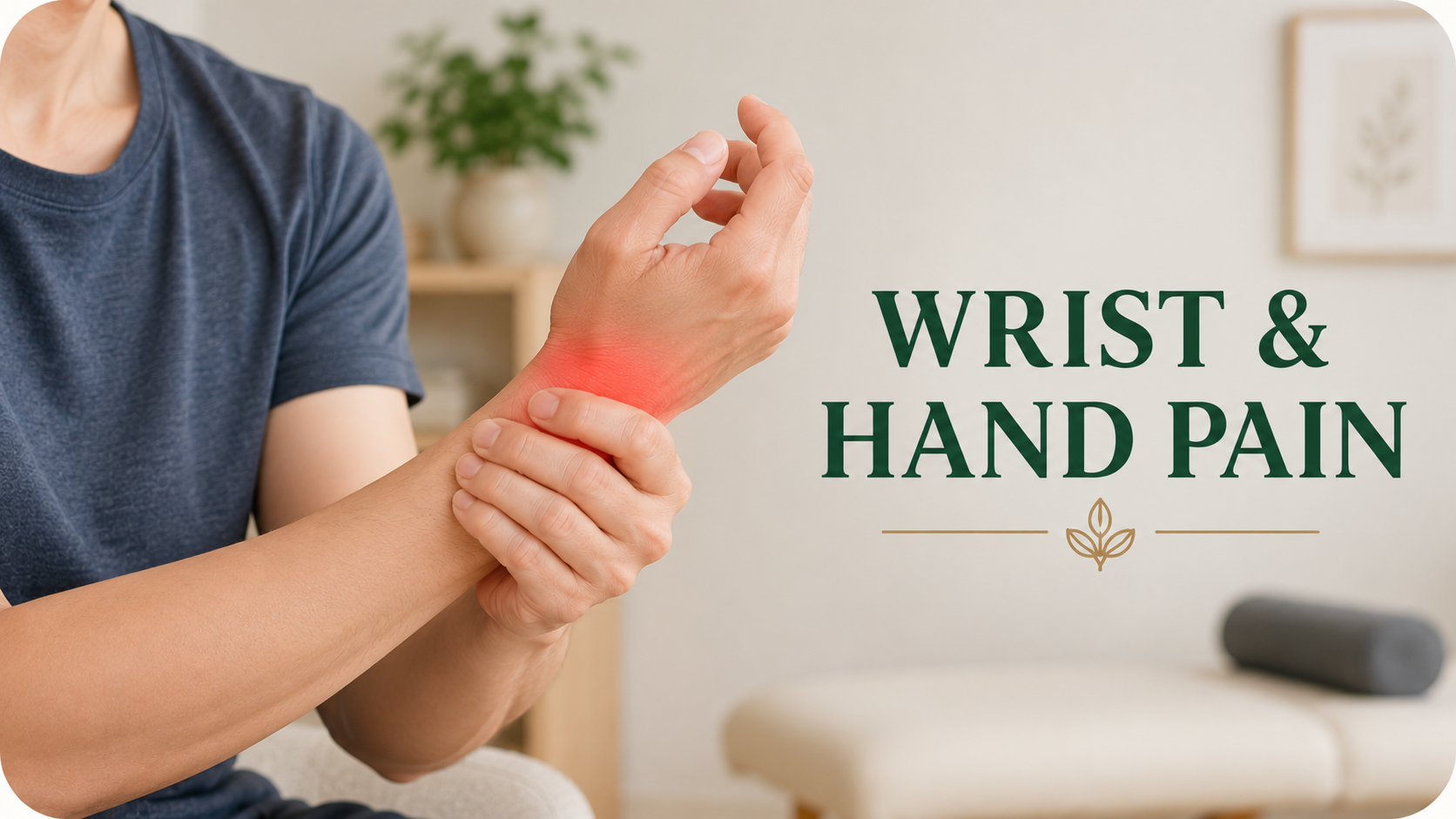
Wrist and hand pain can make simple tasks surprisingly difficult. Typing, gripping a steering wheel, opening jars, lifting a child or sleeping comfortably may become challenging when pain, stiffness or altered sensation develops.
Symptoms can arise from tendons, joints, nerves or a combination of structures. Some conditions respond well to changes in activity and gradual rehabilitation; others require a specific diagnosis, splinting, medication or specialist assessment.
At Ethan Zhang Acupuncture & Chinese Medicine in Goodwood, Adelaide, we offer an individualised approach to musculoskeletal pain management, with acupuncture considered alongside appropriate medical assessment and rehabilitation.
Understanding Wrist & Hand Pain
The wrist and hand contain many small joints, tendons, ligaments and nerves working together to provide both strength and precise movement. Pain location and accompanying symptoms offer useful clues, although they do not establish a diagnosis on their own.
Common presentations include:
- Pain on the thumb side of the wrist, especially with gripping or lifting
- Aching or stiffness in the fingers, thumb or wrist joints
- Tingling or numbness in the hand, sometimes worse at night
- Pain during repetitive work, sport or household activities
- Reduced grip strength or difficulty handling small objects
- Swelling, tenderness or restricted movement after an injury
The pattern, duration and severity of symptoms help guide the assessment.
Common Causes of Wrist & Hand Pain
1. Carpal Tunnel Syndrome
Carpal tunnel syndrome occurs when the median nerve is compressed at the wrist. It commonly causes tingling, numbness or discomfort in the thumb, index and middle fingers, and part of the ring finger. Symptoms may wake people at night or occur while holding a phone or steering wheel.
Some people also notice reduced hand coordination or grip strength. Persistent numbness, thumb muscle weakness or wasting requires prompt medical assessment. Depending on severity, management may involve night splinting, activity adjustments, nerve testing, injections or surgery.
2. De Quervain's Tenosynovitis
De Quervain's is a painful condition involving the tendons on the thumb side of the wrist. It is often aggravated by lifting, gripping, twisting or repetitive thumb movements. Caring for a baby, manual work and certain hobbies can make symptoms more noticeable.
Treatment may include modifying aggravating activities, a suitable thumb-and-wrist splint, rehabilitation and, in some cases, a corticosteroid injection. Not every thumb-side wrist pain is De Quervain's, so examination matters.
3. Thumb Base Osteoarthritis
Osteoarthritis at the first carpometacarpal (CMC) joint can cause pain near the base of the thumb, particularly when pinching, opening containers or turning keys. The joint may feel stiff or tender, and grip tasks can become difficult.
Symptoms do not always match the degree of change visible on an X-ray. Management often focuses on joint protection strategies, hand exercises, appropriate splinting and symptom relief.
4. Wrist Tendinopathy and Overuse-Related Pain
Tendons around the wrist and hand may become painful when activity demands exceed current tolerance. Symptoms can develop with repetitive gripping, racquet sports, gardening, manual work or sudden changes in workload.
A useful recovery plan considers the specific tendon involved, the amount of loading, and a gradual return to the activities that matter to the person. Complete rest is not always necessary or helpful.
5. Finger Joint Pain and Arthritis
Pain and stiffness in the finger joints may be related to osteoarthritis, previous injury or inflammatory arthritis. Morning stiffness lasting a long time, multiple swollen joints or symptoms affecting both hands may suggest an inflammatory condition and should be assessed medically.
6. Sprains, Fractures and Other Injuries
Falls, sporting injuries and sudden twisting forces can injure the wrist ligaments or bones. Some fractures — particularly scaphoid fractures after a fall onto an outstretched hand — can be difficult to recognise without assessment and imaging.
New pain after trauma, especially with swelling, marked tenderness or difficulty using the hand, should not be treated as simple muscle tightness.
Is the Pain Coming From a Nerve, Tendon or Joint?
Different conditions can feel similar. A few broad patterns may help explain why an individual assessment is important:
| Symptom pattern | Possible considerations |
|---|---|
| Night-time tingling in the thumb, index and middle fingers | Median nerve irritation or carpal tunnel syndrome |
| Pain along the thumb side of the wrist during lifting | De Quervain's or another local wrist condition |
| Pain at the base of the thumb when pinching | Thumb CMC joint osteoarthritis |
| Localised pain with repeated gripping or wrist movement | Tendon-related pain |
| Finger joint swelling and prolonged morning stiffness | Inflammatory or degenerative joint disease |
| Pain with numbness extending from the neck or arm | Cervical nerve involvement or another neurological cause |
These are examples, not a self-diagnosis guide. Neck-related nerve symptoms, ulnar nerve compression and other conditions can also affect hand sensation.
Why Wrist & Hand Pain May Persist
Pain may continue when the hand is repeatedly exposed to tasks that exceed its current capacity, particularly when there is little opportunity to vary or adjust activity. Other contributing factors include previous injury, persistent nerve compression, reduced strength, inflammatory disease and sleep disruption.
However, ongoing pain does not necessarily mean ongoing tissue damage. Pain sensitivity, the type of condition and individual circumstances can all influence recovery. A useful plan addresses the diagnosis and functional goals rather than assuming that every painful area needs to be stretched or massaged.
A Traditional Chinese Medicine Perspective
In traditional Chinese medicine (TCM), wrist and hand pain may be discussed using patterns such as Qi and Blood stagnation, or obstruction associated with Wind, Cold or Dampness. Longer-standing symptoms may be interpreted differently according to the individual's wider presentation.
These are traditional explanatory frameworks rather than biomedical diagnoses. Assessment also considers the location of pain, aggravating movements, sensation, strength, medical history and any existing investigations.
How Acupuncture May Support Wrist & Hand Pain Management
Acupuncture may be considered as a complementary option for pain relief in selected wrist and hand conditions. Treatment can involve local or nearby points and, where appropriate, points away from the painful area. Electroacupuncture may sometimes be considered after reviewing suitability and precautions.
Some people report improvement in pain or comfort, but the research varies substantially by condition. Evidence is not strong enough to claim that acupuncture reverses nerve compression, repairs damaged tendons, restores cartilage or reliably avoids surgery.
For carpal tunnel syndrome, acupuncture should not delay assessment of progressive numbness, weakness or muscle wasting. For thumb osteoarthritis and tendon-related pain, symptom management is usually most useful when combined with suitable activity modification and rehabilitation.
Chinese Herbal Medicine
Chinese herbal medicine may be discussed in selected cases following an individual assessment. The evidence for specific wrist and hand conditions is limited, and herbs are not a substitute for treatment of fractures, significant nerve compression or inflammatory arthritis.
Please tell your practitioner about prescription medicines, supplements, pregnancy or breastfeeding, and any upcoming surgery. Herbal products may interact with medicines or affect bleeding risk, and their suitability must be considered carefully.
Rehabilitation and Everyday Self-Management
Practical strategies depend on the diagnosis, but may include:
- Adjusting painful tasks: Temporarily reduce repetitive gripping, forceful pinching or sustained wrist positions while keeping up comfortable activities.
- Varying activity: Break up prolonged typing, tool use or repetitive hand tasks when symptoms increase.
- Appropriate splinting: A night wrist splint may help some people with carpal tunnel symptoms; a thumb support may be useful for selected thumb conditions. The type of splint matters.
- Gradual strengthening: Once suitable, progressive exercises can help rebuild grip strength and activity tolerance.
- Managing swelling or flare-ups: Short-term symptom-relief measures may be helpful, but persistent swelling needs assessment.
- Reviewing work and hobbies: Tool handles, lifting techniques, workload and rest breaks may be adjusted without abandoning valued activities.
Exercises should be matched to the condition. Aggressive stretching or strengthening is not appropriate for every painful wrist, particularly after a recent injury or with significant nerve symptoms.
When to Seek Medical Assessment
Arrange timely medical review if you experience:
- Persistent or worsening numbness, tingling or hand weakness
- Difficulty gripping, dropping objects or loss of thumb muscle bulk
- Ongoing joint swelling, prolonged morning stiffness or multiple painful joints
- Pain that is not improving, or symptoms that interfere substantially with daily life
Seek urgent assessment for severe pain or deformity after an injury, suspected fracture, a cold or pale hand, rapidly worsening neurological symptoms, or a hot, swollen joint with fever. Sudden new arm or hand weakness accompanied by facial drooping or speech difficulty requires emergency care.
What to Expect at Your Appointment
Your consultation begins with a discussion of where the pain occurs, when it started, which movements provoke symptoms and how it affects work, sleep and daily tasks. Relevant previous injuries, surgery, medications and test results are also reviewed.
Assessment may consider wrist and finger movement, tenderness, grip-related tasks and neurological symptoms. If the presentation suggests a fracture, significant nerve compression, inflammatory arthritis or another condition requiring investigation, medical referral will be recommended.
If acupuncture is suitable, the treatment approach is discussed alongside practical advice for activity and recovery. Care is adjusted to your symptoms, preferences and response over time.
Frequently Asked Questions
Can acupuncture help carpal tunnel syndrome?
Acupuncture may be considered for symptom management, but evidence of benefit is uncertain and it does not reliably remove pressure from the median nerve. Persistent numbness, weakness or thumb muscle wasting needs medical assessment.
What is the difference between De Quervain's and thumb arthritis?
De Quervain's typically causes pain along the thumb side of the wrist, often with lifting or thumb movement. Thumb base arthritis more often causes pain around the joint at the base of the thumb, especially during pinching. Examination helps distinguish them.
Should I rest my painful wrist completely?
Not usually, unless a clinician advises immobilisation for a specific injury or condition. Reducing aggravating activities while maintaining comfortable movement is often preferable to prolonged complete rest.
Can wrist pain come from my neck?
Yes. Certain cervical nerve problems can cause pain, tingling or weakness into the arm and hand. Local wrist conditions can produce similar symptoms, so the distribution and examination findings matter.
Do I need an X-ray or scan?
Not everyone does. Imaging or nerve tests may be recommended when there has been trauma, the diagnosis is uncertain, neurological symptoms are progressing or the result would change management.
How many acupuncture treatments will I need?
This depends on the condition, duration and severity of symptoms, and your response. After assessment, we can discuss whether a short trial is reasonable and when progress should be reviewed. No specific number of sessions guarantees an outcome.
Support for Wrist & Hand Pain in Goodwood, Adelaide
If wrist, thumb or hand pain is affecting your work, sleep or everyday activities, an individual assessment can help identify appropriate next steps. At Ethan Zhang Acupuncture & Chinese Medicine, we offer acupuncture and Chinese medicine care informed by a musculoskeletal and orthopaedic clinical background, with referrals recommended when needed.
Ethan Zhang Acupuncture & Chinese Medicine
129B Goodwood Road, Goodwood SA 5034
Phone: 0433 161 121
Website: www.ethanztcm.com
Book an Appointment to discuss your symptoms and whether acupuncture may be appropriate for you.